6 Books Like Sapiens by Yuval Noah Harari
Books like Sapiens that revisit human origins, technology, biology, and history while challenging the stories used to explain civilization.

If you loved...
Sapiens
by Yuval Noah Harari
Explore Sapiens →We found 6 books with similar themes, writing style, and atmosphere. Each one hand-picked for readers who couldn't put down Sapiens.

The Dawn of Everything
David Graeber, David Wengrow
The Dawn of Everything is the most direct argumentative companion here. David Graeber and David Wengrow challenge familiar one-way stories in which small egalitarian bands inevitably become farming states and then modern societies. Like Sapiens, it takes an enormous view of human history, but it lingers over archaeological and anthropological examples that complicate any single ladder of progress. It is longer and more combative than Harari's brisk synthesis. Read it if Sapiens made the broad narrative thrilling and you now want to see how much variety and disagreement the underlying evidence can support.

A Short History of Nearly Everything
Bill Bryson
Bill Bryson begins before humans and ranges across geology, astronomy, chemistry, and the history of scientific discovery. A Short History of Nearly Everything shares Sapiens' gift for making a huge subject readable, but its organizing question is how people learned what they know about the physical world. You will get fewer arguments about myth, empire, and money, and more stories of the people and mistakes behind scientific knowledge. Choose it if the panoramic pace was your favorite part of Harari's book and you want a similarly accessible tour with the natural sciences at its center.

Guns, Germs, and Steel
Jared Diamond
Guns, Germs, and Steel asks why societies developed unequal power and resources. Jared Diamond emphasizes geography, domesticated plants and animals, disease, and the spread of technology. Those forces make a useful comparison with Harari's account of imagined orders and large-scale cooperation. Diamond's sweeping explanations have drawn substantial criticism, particularly where they flatten distinct histories, so this is best read as an influential argument to test rather than a final answer. Choose it if the sections on agriculture and empire in Sapiens left you wanting a stronger environmental account of how different paths emerged.

The Story of the Human Body
Daniel E. Lieberman
Daniel Lieberman tracks how human bodies evolved and how modern environments can mismatch older adaptations. The Story of the Human Body narrows Sapiens' species-level history to anatomy, movement, diet, and health. It offers a different scale of explanation: bones and energy use instead of states and shared belief. Its discussion of health is explanatory, not personal medical advice. Start here if Harari's early chapters made you curious about what evolution shaped in the body as well as in social life, and you want a closer look at evidence from evolutionary biology.

The Gene
Siddhartha Mukherjee
Siddhartha Mukherjee makes the gene the center of a long story about inheritance, discovery, and the social use of biological ideas. The Gene overlaps with Sapiens when both books ask how science changes what humans can know and do, but it is far more focused and spends time on the ethical consequences of a particular field. Its narrative combines scientific history with family experience. Choose it if Harari's later chapters about biotechnology and possible human futures intrigued you, and you would rather understand the mechanisms and debates before returning to very broad predictions.
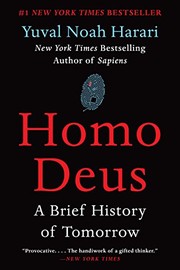
Homo Deus
Yuval Noah Harari
Homo Deus is Harari's own continuation, turning from how humans reached the present toward questions about algorithms, data, power, and possible futures. The familiar voice and large claims make it the obvious next book for readers who want more of the same kind of synthesis. It is also more speculative than Sapiens, because its central subject has not yet happened. Read it for provocative questions about technology and human aims, while treating its forecasts as arguments rather than settled outcomes. It is a continuation of Harari's perspective, not an independent check on his earlier history.
Explore More
Discover similar reads for other beloved titles
Frequently Asked Questions
Quick answers about books like Sapiens
What should I read after Sapiens?
If you enjoyed Sapiens by Yuval Noah Harari, try The Dawn of Everything, A Short History of Nearly Everything, Guns, Germs, and Steel, The Story of the Human Body, and The Gene. Each one was hand-picked for similar themes, writing style, and atmosphere.
How many books are similar to Sapiens?
We've curated 6 books with a similar feel to Sapiens. Books like Sapiens that revisit human origins, technology, biology, and history while challenging the stories used to explain civilization.
Are there books like Sapiens by Yuval Noah Harari?
Yes — readers who loved Sapiens often pick up The Dawn of Everything, A Short History of Nearly Everything, and Guns, Germs, and Steel. They share the qualities that made Yuval Noah Harari's book hard to put down.
What makes a book similar to Sapiens?
The Dawn of Everything is the most direct argumentative companion here. David Graeber and David Wengrow challenge familiar one-way stories in which small egalitarian bands inevitably become farming states and then modern societies. Like Sapiens, it takes an enormous view of human history, but it lingers over archaeological and anthropological examples that complicate any single ladder of progress. It is longer and more combative than Harari's brisk synthesis. Read it if Sapiens made the broad narrative thrilling and you now want to see how much variety and disagreement the underlying evidence can support. Bill Bryson begins before humans and ranges across geology, astronomy, chemistry, and the history of scientific discovery. A Short History of Nearly Everything shares Sapiens' gift for making a huge subject readable, but its organizing question is how people learned what they know about the physical world. You will get fewer arguments about myth, empire, and money, and more stories of the people and mistakes behind scientific knowledge. Choose it if the panoramic pace was your favorite part of Harari's book and you want a similarly accessible tour with the natural sciences at its center.
Further Reading
Guides on tracking down the books you've half-forgotten
Only have a vibe? identify the genre first. Or describe the plot if you remember a scene.
Looking for a specific book you can't remember?
Describe it & we'll find it