11 Weirdest Books to Read: Strange Stories and Unusual Pages
Choose your next strange read by what makes it unusual.
Curator's note
The weirdest books on this shelf range from House of Leaves, a horror novel whose pages become a maze, to Codex Seraphinianus, an illustrated encyclopedia of an imaginary world. These eleven picks are grouped by what makes them strange, so you can choose a story to follow, a puzzle to work through, or a book to explore one image at a time.
Start with House of Leaves if you want horror and a physical puzzle. For a playful story about trying to finish a book, choose If on a Winter's Night a Traveler. If you would rather study strange pictures than follow a plot, try Codex Seraphinianus. Finnegans Wake is the demanding choice: its wordplay asks you to spend time with the language itself.
Typographic and ergodic
These are books where the page itself is part of the story. Mark Z. Danielewski's House of Leaves is the obvious one: text spirals, runs sideways, and shrinks to a single word per page when the characters crawl through a tunnel. His Only Revolutions asks you to physically rotate the book every eight pages to follow the second narrator. Steven Hall's The Raw Shark Texts hides a flipbook shark made of typed letters in the middle of the novel. Reading any of these is closer to navigating a maze than turning pages.
Constraint writing
The premise is simple and demented: write a book under a rule that almost guarantees failure, then finish it anyway. Ernest Vincent Wright wrote Gadsby in 1939 without using the letter E across 50,000 words, and reportedly tied the E-key down so he couldn't cheat. James Joyce spent 17 years on Finnegans Wake, building a dream-language of portmanteaus from more than 60 tongues, and ended the book on a sentence that loops back to the first line. Italo Calvino's If on a Winter's Night a Traveler keeps interrupting the story you are trying to read with the beginning of another novel. Its reader-protagonists spend the book chasing the missing continuations.
Illustrated and unreadable-by-design
Luigi Serafini's Codex Seraphinianus is one of the strangest books published in the twentieth century, and it has the rare virtue of being unreadable on purpose. It looks like an illustrated encyclopedia of an alien planet, with couples melting into crocodiles and fruit that bleeds, and the captions are written in an invented script. You don't read it so much as wander it.
Cult and decadent
Some books are weird because nobody asked for them and nothing else is shaped like them. Laurence Sterne's Tristram Shandy (1760) is the original meta-novel: a black mourning page, a marbled page, blank chapters, and a narrator who can't manage to get himself born until volume three. Joris-Karl Huysmans's Against Nature is mostly a man alone in a house with his perfumes, his books, and a tortoise he gilds with jewels until it dies. William Burroughs's Naked Lunch was cut up and reshuffled, and Burroughs claimed the chapters could be read in any order. Katherine Dunn's Geek Love is a family saga about carnival parents who breed their own freak-show children using radioisotopes, and somehow the book is also tender.
Pick the kind of weird that sounds most like the book-shaped hole you're trying to fill, and start there.
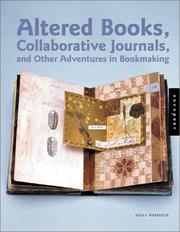
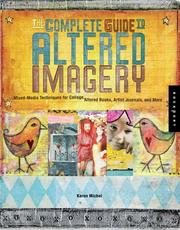
For a shorter mystery set in an impossible house, read our guide to Piranesi by Susanna Clarke. If the physical pages interest you most, our altered books reading list covers artists who cut, paint, and rebuild existing books.

House of Leaves
Mark Z. Danielewski·1998
Typographic horror: text spirals, flips, and shrinks to mimic a house whose interior is bigger than its exterior.

Codex Seraphinianus
Luigi Serafini·1983
An illustrated encyclopedia of an imaginary world written in a language nobody can read — including its own author, supposedly.

Finnegans Wake
James Joyce·1928
17 years of dream-language portmanteaus across 60+ tongues, beginning mid-sentence and ending where it begins.

Gadsby
Ernest Vincent Wright·1939
A 50,000-word novel written entirely without the letter "e" — Wright reportedly tied down the E-key on his typewriter.
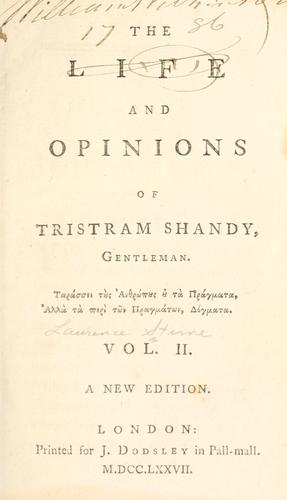
The Life and Opinions of Tristram Shandy, Gentleman
Laurence Sterne·1760
The original meta-novel: a black mourning page, a marbled page, blank chapters, and a narrator who can't get himself born until volume three.

If on a Winter's Night a Traveler
Italo Calvino·1982
The reader is the protagonist, and every chapter is the opening of a different novel you'll never finish.

The Raw Shark Texts
Steven Hall·2007
A conceptual shark made of language hunts the protagonist through the book itself — including a flipbook shark assembled from typography.

À rebours
Joris-Karl Huysmans·1884
Almost no plot — just a decadent aristocrat alone with his perfumes, his books, and a tortoise he gilds with jewels until it dies.
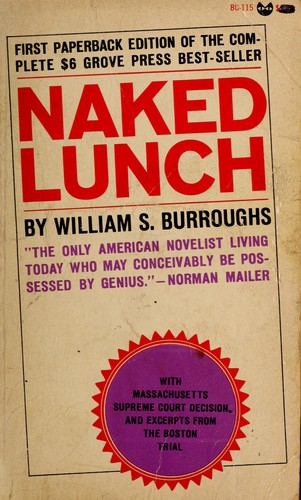
Naked Lunch
William S. Burroughs·1959
Burroughs claimed the chapters could be read in any order; the result is a hallucinatory cut-up of talking typewriters and Interzone.

Geek love
Katherine Dunn·1989
A traveling-carnival family deliberately breeds its own freak-show children using radioisotopes and amphetamines.

Only Revolutions
Mark Z. Danielewski·2006
Two narrators, two halves of the book — flip it 180° every eight pages to read the other.
More curated lists
Other reading lists from the same shelf



Looking for a specific book you can't quite remember?
Describe it & we'll find it