Holocaust Books
The memoirs, novels, and histories every reader should know.
Curator's note
Holocaust books fall into three obvious modes: the survivor memoirs, the fiction that came after, and the histories that try to explain how a continent let it happen. The strongest in each refuse to let the scale of the event swallow the people inside it. You meet one family in an attic, one boy on a march out of Buna, one cartoonist's father at a kitchen table in Queens.
Where to start
If you've read nothing on the subject, start with Elie Wiesel's Night. It's the shortest path into a survivor's interior — under 120 pages, direct and unsparing. Anne Frank's diary is the other natural opening, the war pressing in from outside an Amsterdam annex. Read together, they cover the inside of the camps and the world that made the camps possible.
By survivors
Books from Holocaust survivors carry weight no later writer can manufacture. Primo Levi was a chemist before Auschwitz, and If This Is a Man reads like a chemist's notebook applied to atrocity — observant and precise, refusing the rhetoric the subject seems to demand. Viktor Frankl wrote Man's Search for Meaning in nine days after liberation, and it became a foundational psychology text. Corrie ten Boom's The Hiding Place is the canonical rescuer memoir, written by a Dutch Christian who hid Jews in her father's watch shop until the family was caught and sent to Ravensbrück. Each one writes from a different position inside the same disaster.
Beyond memoir
Fiction does work memoir cannot. William Styron's Sophie's Choice gave English a phrase for impossible moral horror. Bernhard Schlink's The Reader is the strongest novel about postwar German shame and what the next generation owes the past. Irène Némirovsky drafted Suite Française in occupied France months before her deportation to Auschwitz; the manuscript was kept in a suitcase by her daughter and published sixty years later. Art Spiegelman's Maus won the Pulitzer for showing that comics can carry the weight, and Christopher Browning's Ordinary Men explains the perpetrator side using the killers' own postwar testimony — the one history book on this list most populist reading guides leave off.
What to skip and why
Two books show up on almost every popular list and are missing from this one on purpose. The Boy in the Striped Pajamas by John Boyne and The Tattooist of Auschwitz by Heather Morris are both heavily criticized by historians and by the Auschwitz Memorial itself for inventing scenarios that could not have occurred and for softening the camp into a setting where children meet through fences. There are better books for younger readers, and Lois Lowry's Number the Stars is one of them — a Newbery winner about the Danish resistance smuggling Jews to Sweden, age-appropriate without lying about what was happening.

Night
Elie Wiesel·1960
The defining survivor memoir. Wiesel's account of Auschwitz and Buchenwald is so spare and direct it has anchored Holocaust literature for sixty-plus years. Read this first.

Het Achterhuis
Anne Frank·1944
The most-read first-person document of the Holocaust, written from a hidden Amsterdam annex by a teenager who did not survive. The war happens around the diary, which is what makes it work.

Maus I
Art Spiegelman·1986
The Pulitzer-winning graphic novel that legitimized comics as serious literature and reframed survivor trauma as an inherited, second-generation story.
If this is a man
Primo Levi·1960
Levi's chemist's-eye memoir of Auschwitz: clinical, humane, and often called the most morally precise book ever written about the camps.

... Trotzdem Ja zum Leben sagen
Viktor E. Frankl·1946
A psychiatrist's account of surviving four camps, paired with the logotherapy framework it produced. The rare Holocaust book that became a foundational psychology text.
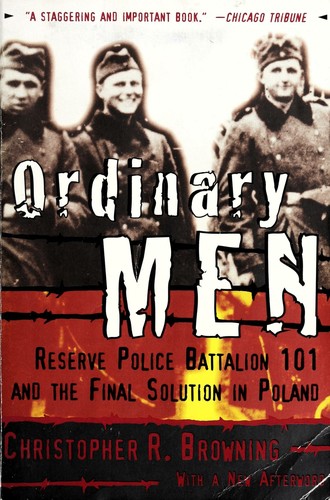
Ordinary Men
Christopher R. Browning·1992
The perpetrator history populist lists skip. Browning reconstructs how a unit of middle-aged German reservists became mass killers, drawn from their own postwar testimony.

The Book Thief
Markus Zusak·1998
Narrated by Death, this novel about a German girl hiding a Jewish refugee is the gateway Holocaust novel for younger readers without being condescending.

Sophie's Choice
William Styron·1979
The American novel that gave the language a phrase for impossible moral horror, anchored by an Auschwitz survivor's account in postwar Brooklyn.

Der Vorleser
Bernhard Schlink·1995
A postwar German novel about complicity, shame, and what the next generation owes the past. The strongest fiction on perpetrator-side reckoning.

Number the Stars
Lois Lowry·1901
A Newbery-winning middle-grade novel about the Danish resistance smuggling Jews to Sweden. The cleanest age-appropriate entry point.

The Hiding Place
Corrie ten Boom·1971
A Dutch Christian watchmaker's family hides Jews in Haarlem, is caught, and ends in Ravensbrück. The canonical rescuer memoir.

Suite française
Irène Némirovsky·2004
Written in real time by a Jewish novelist before her deportation to Auschwitz, this unfinished novel of occupied France was rediscovered and published sixty years later.
More curated lists
Other reading lists from the same shelf

11 Weirdest Books to Read: Strange Stories and Unusual Pages
Choose your next strange read by what makes it unusual.
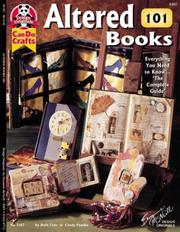
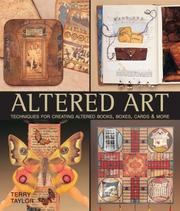
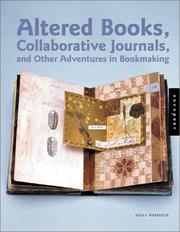
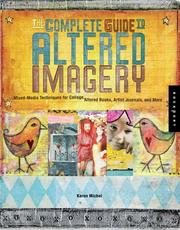
Altered Books
The definitive reading list for altered-book artists and collectors.
Books About Mesopotamia
A curated path from gateway histories to Gilgamesh and the primary sources.
Looking for a specific book you can't quite remember?
Describe it & we'll find it