Books About Mesopotamia
A curated path from gateway histories to Gilgamesh and the primary sources.
Curator's note
Most reading lists on ancient Mesopotamia drop a dozen books into a single bucket and walk away. A 1964 monograph sits next to a Penguin Gilgamesh next to a documentary tie-in, and you have to figure out which to open first. The books below are organized by what you actually need: a way in, a survey, a civilization, a translation, a history of the discovery.
If you read only one
Start with Paul Kriwaczek's Babylon: Mesopotamia and the Birth of Civilization. Kriwaczek was a journalist, not an Assyriologist, and the book benefits from it. He moves from Uruk to Nebuchadnezzar in clean narrative chapters and writes as if he expects you to keep reading. The book that turns three thousand years of history into something you can hold in your head.
The standard surveys
When you want more structure, the surveys take over. Georges Roux's Ancient Iraq has been the introductory one-volume history since 1964. Dated in places (Sumerian origins especially), but historians still point newcomers toward it. Marc Van De Mieroop's A History of the Ancient Near East is the current university textbook: tighter, less personality. Amanda Podany's Weavers, Scribes, and Kings (2022) is the newest and most humane, built from individual lives recovered from cuneiform tablets — a quietly radical move in a field that defaults to king-lists.
Civilizations and cities
If a single civilization or angle pulled you in, three books split the territory. Samuel Noah Kramer's The Sumerians is the foundational popular book on Sumer, by the Assyriologist who decoded much of the corpus. Gwendolyn Leick's Mesopotamia: The Invention of the City tells the region through ten cities (Eridu, Uruk, Ur, Nineveh, Babylon), a structural angle few others take. Karen Rhea Nemet-Nejat's Daily Life in Ancient Mesopotamia is thematic instead of dynastic: family, work, religion, food. The right book if king-list histories bore you.
Gilgamesh: which translation?
Andrew George's Penguin Classics edition is the scholarly translation: Standard Babylonian text, older Sumerian poems, fragments, apparatus. If you want the actual epic with the gaps marked, read George. Stephen Mitchell's Gilgamesh: A New English Version is a looser literary rendering for readers who want the story to move. A fine poem, not a translation. Stephanie Dalley's Myths from Mesopotamia sets it next to Enuma Elish, Atrahasis, and the Descent of Ishtar, for readers who came for the mythology rather than one poem.
Short version: George for the real text, Mitchell for the story, Dalley for Gilgamesh in context.
How we got here
Two books cover the rediscovery itself. David Damrosch's The Buried Book runs Gilgamesh in reverse, from George Smith reading the Flood tablet in London in 1872 back to the poem's composition. The best account of how a lost literature was put back together. A. Leo Oppenheim's Ancient Mesopotamia: Portrait of a Dead Civilization is the argumentative classic, as much about what cuneiform sources cannot tell us as what they can.
Mesopotamia rewards the reader because so much of what we take for granted was being worked out there for the first time, often by people whose names we know.

Babylon
Paul Kriwaczek·2010
The single best gateway book on Mesopotamia. Kriwaczek was a journalist, and it shows in the best way: a clean narrative arc from Uruk to Nebuchadnezzar, written for adults who want to be told a story rather than briefed.

Ancient Iraq
Georges Roux·1964
The classic one-volume history, in print since 1964 and still the book historians most often hand a curious newcomer. Dated in places (especially on Sumerian origins) but the prose holds up better than most of what replaced it.

History of the Ancient near East, Ca. 3000-323 BC
Marc Van De Mieroop·2010
The standard modern university textbook on the ancient Near East. If Roux is the older voice, Van De Mieroop is the current one: tighter chronology, more recent scholarship, the academic spine of any serious reading list.
Weavers, Scribes, and Kings
Amanda H. Podany·2022
The most recent major survey, and the most humane one. Podany builds her history out of individual lives recovered from cuneiform tablets, which is a quietly radical move in a field that usually defaults to dynastic chronology.
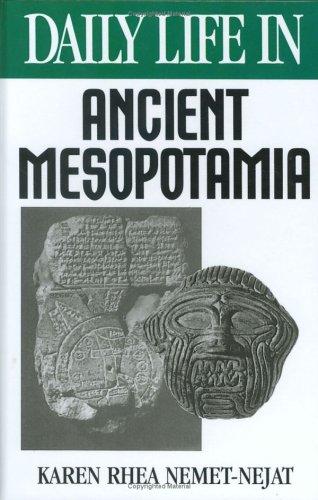
Daily Life in Ancient Mesopotamia
Karen Rhea Nemet-Nejat·1998
Thematic instead of chronological. Nemet-Nejat moves through family, work, religion, food, and law, which is the right book for readers who find dynastic histories dry and want to picture the texture of a Babylonian week.

The Sumerians: their history, culture, and character
Samuel Noah Kramer·1963
The foundational popular book on Sumer, written by the Assyriologist who decoded much of the corpus himself. Sixty years later, it is still the place to go for the famous catalogue of Sumerian firsts.
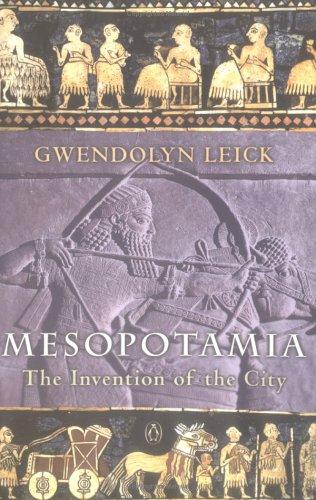
Mesopotamia
Gwendolyn Leick·2001
Leick tells the region's history through ten cities — Eridu, Uruk, Ur, Nineveh, Babylon — which is a structural angle almost no other Mesopotamia book takes. Read it after a chronological survey for a second pass.
Ancient Mesopotamia: portrait of a dead civilization
A. Leo Oppenheim·1964
The argumentative classic. Oppenheim spends as much of the book on what cuneiform sources cannot tell us as on what they can, which is the kind of honesty later popular histories tend to skip. Pair with Van De Mieroop.

The Epic of Gilgamesh
Andrew George·2003
The scholarly translation. George gives you the Standard Babylonian text, the older Sumerian poems, and the tablet fragments, with the gaps marked where the gaps are. If you want to read the actual epic rather than a literary version of it, this is the one.

Gilgamesh
Stephen Mitchell·2004
A literary rendering, not a translation in any strict sense. Mitchell smooths the gaps and reaches for momentum; if you want the story to move and you can let go of the apparatus, his is the version that reads like a poem in English.

Myths from Mesopotamia
Stephanie Dalley·1989
The one-volume primary-source anthology that puts Gilgamesh next to Enuma Elish, Atrahasis, and the Descent of Ishtar. Read this if you came for the mythology rather than the single poem.

The Buried Book
David Damrosch·2007
The best narrative account of how Gilgamesh was put back together. Damrosch runs the story in reverse from George Smith reading the Flood tablet in London in 1872 back to the poem's composition, and the structure pays off.
More curated lists
Other reading lists from the same shelf

11 Weirdest Books to Read: Strange Stories and Unusual Pages
Choose your next strange read by what makes it unusual.

Altered Books
The definitive reading list for altered-book artists and collectors.




Holocaust Books
The memoirs, novels, and histories every reader should know.
Looking for a specific book you can't quite remember?
Describe it & we'll find it