9 Books Like The Hunger Games by Suzanne Collins
Books like The Hunger Games, from The Testing and The Maze Runner to Divergent and Battle Royale, for survival games and dystopian rebellion.

If you loved...
The Hunger Games
by Suzanne Collins
Explore The Hunger Games →We found 9 books with similar themes, writing style, and atmosphere. Each one hand-picked for readers who couldn't put down The Hunger Games.

The Testing
Joelle Charbonneau
If what you want back is the arena's uneasy arithmetic—who might help, who might turn on you, and what a frightened teenager can do with limited supplies—start with The Testing. Cia Vale is chosen for a government program that promises university and a future rebuilding a damaged country. The tests are deadly, and her father's warning to trust no one complicates every alliance. Like Katniss, Cia has to think past the task immediately in front of her and ask what the authorities gain from it. The setting is an exam rather than a televised spectacle, so the suspense comes from hidden rules as much as physical danger.

The Maze Runner
James Dashner
Thomas arrives in the Glade with almost no memory, surrounded by other boys and a maze whose walls move. The immediate question is as simple as Katniss's in the arena: how do you stay alive long enough to find a way out? Both books make young people improvise under conditions designed by someone they cannot see, then slowly widen the question to who built the danger. The Maze Runner has more puzzle solving and group coordination than the Games' public performance and political symbolism. If the Cornucopia scramble and the search for safe ground were your favorite parts of The Hunger Games, this is the closest kind of momentum on the list.
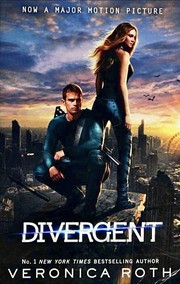
Divergent
Veronica Roth
Panem sorts people by district and then turns two children from each into a national lesson. Divergent uses a different sorting machine: five factions organized around virtues, with Beatrice Prior asked to choose where she belongs. Her choice leads to dangerous initiation trials, but the deeper trouble is that she does not fit the categories the city depends on. That makes this a good next read if Katniss's refusal to play the role assigned to her mattered more than the survival tactics alone. It has a strong YA romance thread and a quicker move into faction politics. There is no single televised death arena to replace Collins's central device.

Battle Royale
Koushun Takami
This is the most literal match for the Games' terrible setup: a class of students is taken to an island, armed, and ordered by an authoritarian program to kill until one remains. Friendship becomes a practical risk when the rules reward betrayal. That pressure makes a sharp comparison with Katniss's alliances, especially her refusal to treat every other tribute as an enemy. Expect a much harsher, more graphic thriller than Collins's YA novel, with violence close to the surface and less room for the larger rebellion to develop. VIZ publishes it as a novel; some similarly titled Open Library records are manga volumes, so check the edition if you want Takami's prose story.
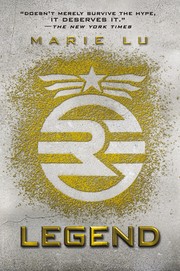
Legend
Marie Lu
Katniss sees the Capitol's power from a poor district. Legend lets you see a divided state from both sides at once: June is a celebrated military prodigy, while Day, raised in the slums, is the Republic's most wanted criminal. Their pursuit brings the government's story about itself under pressure. The alternating viewpoints make the class divide more explicit than Katniss's single perspective, and the chase takes the place of an arena. Choose it for the part of The Hunger Games where survival begins to turn into resistance: a young person discovers that official rules protect the people who wrote them, and then has to decide whom to believe.
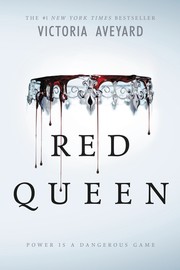
Red Queen
Victoria Aveyard
Mare Barrow is a Red in a society ruled by Silver-blooded people with extraordinary powers. When she reveals an ability that should be impossible for someone of her class, the royal court needs to control the story. That is the Katniss connection here: a girl from the oppressed majority becomes a symbol other people want to use, while trying to keep some power over her own choices. Red Queen replaces the televised arena with palace maneuvering, supernatural abilities, and a more prominent romance. It is a looser match for wilderness survival but a useful one if you wanted another series about class hierarchy, public image, and a rebellion that does not simply belong to its heroine.
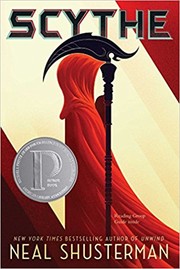
Scythe
Neal Shusterman
In Scythe, people no longer die naturally, so a sanctioned group is assigned to end lives for population control. Citra and Rowan are unwilling teenage apprentices, trained for a job whose supposed necessity does not make its violence easier to accept. Collins uses the Games to ask what happens when a state makes killing into civic routine; Shusterman moves that question into an apparently comfortable world and gives the would-be killers the point of view. There is competition between the apprentices, but no arena or district rebellion at the outset. Read it if the moral machinery behind the Games stayed with you longer than the chase through the woods.

Uglies
Scott Westerfeld
Tally Youngblood expects the operation that will make her a Pretty and open a life of effortless fun. Her friend's refusal exposes what the city's promise of beauty costs. The link to Katniss is the moment a teenager sees the social order as an engineered bargain rather than a fact of life. Both heroines are pulled between personal loyalty and a system that knows how to make obedience look attractive. Uglies has resistance, pursuit, and state control, but its central pressure is conformity, not a competition to the death. Pick it if Panem's control of appearances and acceptable behavior interested you as much as the Games themselves.
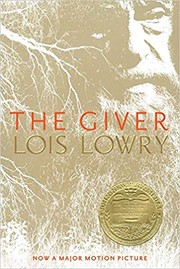
The Giver
Lois Lowry
Jonas's community appears orderly and safe because painful memories and difficult choices have been placed in someone else's hands. When he is selected to receive those memories, he begins to understand the price of that calm. It is a quieter, younger-audience dystopia than The Hunger Games, with no arena and far less action. The connection is the slow education of a child who realizes that a society's rules can hide cruelty behind the language of protection. If the Capitol's official version of Panem made you think about what citizens are allowed to know, The Giver follows that question all the way down to memory itself.
Explore More
Discover similar reads for other beloved titles
Frequently Asked Questions
Quick answers about books like The Hunger Games
What should I read after The Hunger Games?
If you enjoyed The Hunger Games by Suzanne Collins, try The Testing, The Maze Runner, Divergent, Battle Royale, and Legend. Each one was hand-picked for similar themes, writing style, and atmosphere.
How many books are similar to The Hunger Games?
We've curated 9 books with a similar feel to The Hunger Games. Books like The Hunger Games, from The Testing and The Maze Runner to Divergent and Battle Royale, for survival games and dystopian rebellion.
Which books should fans of Suzanne Collins try after The Hunger Games?
Start with The Testing, The Maze Runner, and Divergent. The comparisons on this page explain the connections and differences so you can choose your next book.
What makes a book similar to The Hunger Games?
If what you want back is the arena's uneasy arithmetic—who might help, who might turn on you, and what a frightened teenager can do with limited supplies—start with The Testing. Cia Vale is chosen for a government program that promises university and a future rebuilding a damaged country. The tests are deadly, and her father's warning to trust no one complicates every alliance. Like Katniss, Cia has to think past the task immediately in front of her and ask what the authorities gain from it. The setting is an exam rather than a televised spectacle, so the suspense comes from hidden rules as much as physical danger. Thomas arrives in the Glade with almost no memory, surrounded by other boys and a maze whose walls move. The immediate question is as simple as Katniss's in the arena: how do you stay alive long enough to find a way out? Both books make young people improvise under conditions designed by someone they cannot see, then slowly widen the question to who built the danger. The Maze Runner has more puzzle solving and group coordination than the Games' public performance and political symbolism. If the Cornucopia scramble and the search for safe ground were your favorite parts of The Hunger Games, this is the closest kind of momentum on the list.
Further Reading
Guides on tracking down the books you've half-forgotten
Only have a vibe? identify the genre first. Or describe the plot if you remember a scene.
Looking for a specific book you can't remember?
Describe it & we'll find it