Featured Title
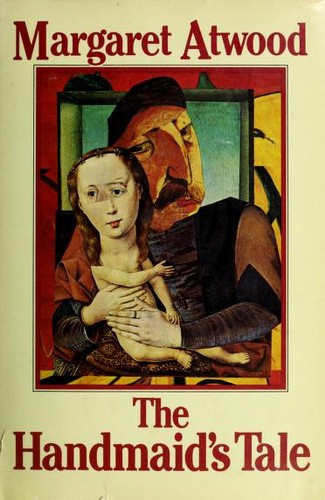
Cover of The Handmaid's Tale

The Handmaid's Tale

by Margaret Atwood

First published 1985 ISBN 9780385490818 dystopian fictionliterary fiction
✦

Summary

Offred lives under Gilead's theocratic regime, where fertile women called Handmaids are assigned to powerful households and stripped of autonomy. Her account moves between daily rituals, memories of life before the takeover, and risky attempts to preserve a self the state tries to rename. Margaret Atwood makes the system frightening through ordinary restrictions as much as public violence. The novel leaves parts of Offred's fate uncertain. It is the first Gilead book; The Testaments returns to that world years later through different narrators.

Themes & motifs
bodily autonomystate controlmemoryresistance
❧ If you liked The Handmaid's Tale ❧
The Testaments
View on Open Library

The Testaments

Margaret Atwood

editions

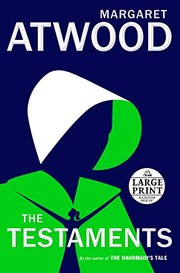
The Testaments is the direct return to Gilead, set years after Offred's account. Three narrators, including Aunt Lydia, expose parts of the regime that Offred could only guess at. Atwood keeps the questions of complicity, resistance, and who controls a woman's life, but the sequel moves more quickly and gives its characters a clearer political task. Read it first if you want to remain in the same world and learn how its power works from the inside. Expect a different shape and tone, not a continuation of Offred's intimate single voice.
The Power
View on Open Library

The Power

Naomi Alderman

editions

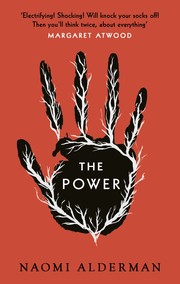
Women and girls develop the ability to release electrical force, reversing some familiar patterns of bodily power. The Power asks a question adjacent to The Handmaid's Tale: what happens when a society builds its rules around who can hurt whom? Naomi Alderman follows several characters across countries and institutions, so the story feels broader and more satirical than Offred's constrained testimony. It does not argue that a reversal automatically produces justice. Choose it for an unsettling experiment about power and gender, with violence and a faster, more expansive plot.

No Cover
View on Open Library

Vox

Christina Dalcher

editions

A government limits women to a hundred spoken words a day, and a scientist is pulled back into public work under conditions she cannot accept. Vox shares Gilead's interest in how control is made routine through rules that reach family and work. Christina Dalcher sets the change in a near-contemporary United States and drives the story as a thriller, with less ambiguity than Atwood's narration. Its speech-count device is blunt by design. Pick it if the restrictions in The Handmaid's Tale made you want a more immediate, plot-led account of resisting them.

Red Clocks
View on Open Library

Red Clocks

Leni Zumas

editions

Abortion and in vitro fertilization are illegal in the near future of Red Clocks, leaving five women to negotiate the consequences in very different ways. Leni Zumas connects private decisions to a state claim over reproduction, as Atwood does, but avoids a single handmaid's vantage point or one totalizing regime. The novel is quieter, stranger, and more fragmented, with attention to work, friendship, and the language used to define motherhood. It fits if you want the reproductive-politics question brought closer to recognizable daily life.

The Grace Year
View on Open Library

The Grace Year

Kim Liggett

editions

Every year, girls are sent away during a dangerous 'grace year' before they can return to their community. Kim Liggett's novel shares Gilead's fear of women being treated as a threat that must be controlled. The Grace Year is young adult survival fiction, however: its isolated setting and immediate dangers create a more physical, mystery-driven story than Offred's reflective account. Choose it for resistance among girls under rules built on superstition, while expecting a younger voice and a much faster pace.

Looking for a different book you can't quite remember?

Describe it & we'll find it
✦

Choose Your Shelf

Every reader is welcome. Pick the experience that fits your journey.

Browsing · Free

Browsing

For the casual book lover

Free

No account needed

  • Find books by plot description
  • AI-powered matching
  • Daily plot and cover puzzles
  • Last 7 days of the puzzle archive
  • Book details and purchase links
Start finding books
Membership · $5

Membership

For the devoted reader

$5 /month

Your personal book companion

  • Everything in the free plan
  • Full puzzle archive — every day, all the way back
  • Saturday themed mega-quiz, in your inbox
  • Deeper AI search across the catalog
  • Ad-free reading
✦

The free plan is here to stay. We'll always help you find your forgotten books at no cost.

✦

Ex Libris

What Membership gets you

The archive

The whole shelf, not just this week

Free readers get the last 7 days. Members get every plot and cover puzzle we've ever published. Browse back, pick a date, finish the ones you missed.

The weekend

A themed quiz, by post

Each weekend we send Members a themed quiz, built from books in your reading orbit. One author, one decade, one genre. In your inbox by Saturday morning.

The search

A slower, deeper way to find a book

Members get our web-grounded lane. It looks beyond the catalog and finds books from the foggy half-memories the fast lane gives up on.

The quiet

No ads, anywhere

The site stays quiet. No display ads on result pages, on the archive, or anywhere else you read.

✦

Ask the librarian

Questions, answered

Can I cancel anytime?

Yes. From your Account page, two clicks opens the Stripe billing portal and you can stop renewal right there. You'll keep Member access until the end of the period you've already paid for.

What's it cost, exactly?

$5 USD per month, or $50 USD per year (that's two months free). Both options run through Stripe. Switch between them anytime from the billing portal.

Do I need a Member account to play the daily puzzle?

No. The daily plot and cover puzzles are free for everyone, and so is the last 7 days of the archive. Membership opens up everything older than that, plus the Saturday mega-quiz and the rest of what's listed above.

What happens to my streak if I cancel?

Your streak history stays. You can keep playing the daily puzzles for free after cancelling. You lose access to the full archive, the Saturday mega-quiz, and deeper AI search, and you'll see ads again.

Will more features be added?

Yes. We're working on saved reading lists, personalized recommendations, and a reading-history export. Members get all of these automatically as they ship, at the same price. No upgrade or new tier.

How do you handle payment info?

Stripe handles all of it. Your card never touches our servers. To update your card or download invoices, use the billing portal from your Account page.

Can I get a refund?

Yes. Email justin@whatisthatbook.com within 14 days of your first charge, monthly or annual, and we'll refund you in full. No questions asked. Full details on the refund policy page.